

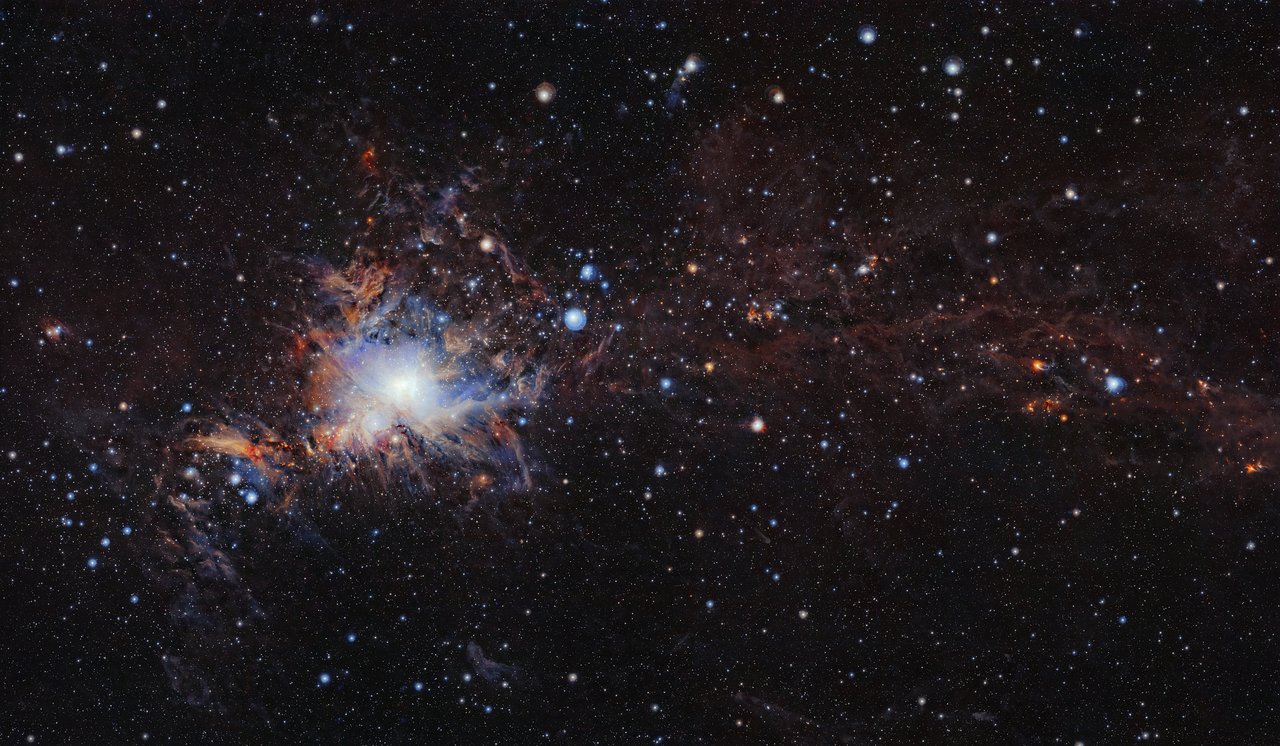

VISIONS mapped all nearby star-forming clouds of the southern sky in the near-infrared, following the motions of young stars still buried in the clouds that formed them.
The search for our cosmic ancestry
The VISTA Star Formation Atlas (VISIONS) is a sub-arcsecond near-infrared atlas of all nearby star formation complexes within 500 pc that are accessible from the southern hemisphere. The atlas contains tens of thousands of young stars, aged 0.1 to 10 Myr, is sensitive to objects down to a few Jupiter masses, and reaches spatial resolutions of 100 to 250 au.
Between 2017 and 2022, VISIONS observed its target regions several times per year, allowing the community to measure the proper motions of young stars still hidden from optical telescopes by their parental clouds. Together with Gaia, the survey reveals the 3D dynamics of the nearby stellar nurseries and of the clouds spawning them, from cloud formation to the build-up of the Milky Way field population. VISIONS aims to establish the “local truth” on the relation between young stars and molecular clouds, providing a benchmark for extra-galactic studies.
From protostar to young sun
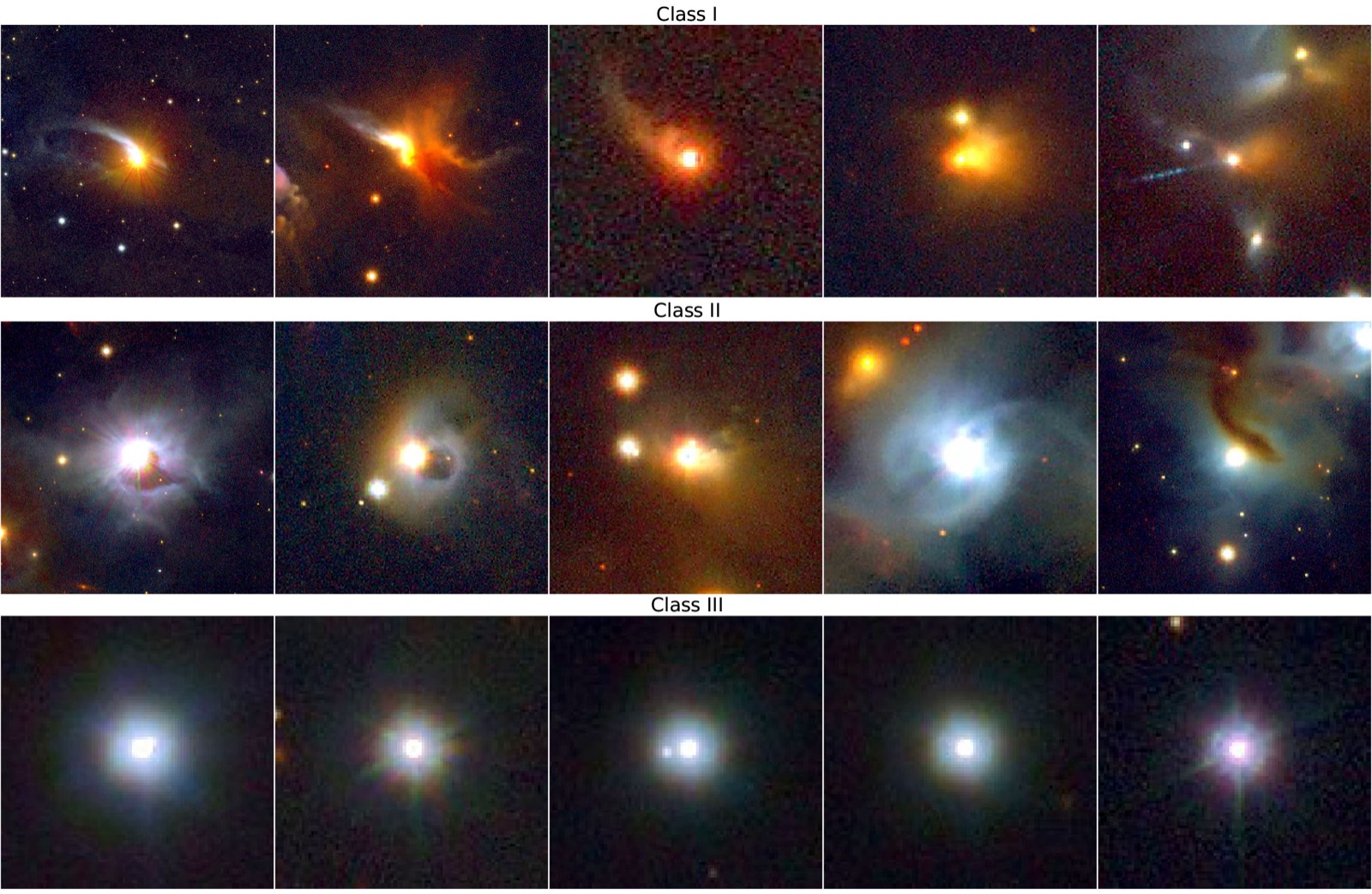
Young stars pass through distinct evolutionary classes, from protostars deeply embedded in their natal cloud to nearly naked young suns. VISIONS collected thousands of images of such objects at physical resolutions of 100 to 250 au, sharpening this rough evolutionary sequence and our understanding of the early evolution of stars.
Four open questions
- How do diffuse interstellar clouds form, evolve, and eventually collapse to form stars, planets, and life?
- How do dust properties change inside clouds, from the diffuse medium to the stellar embryos?
- How do stars affect protoplanetary disks? What is the role of environment in planet formation?
- How do stellar clusters form? How do they evolve to build the Milky Way field population?
News
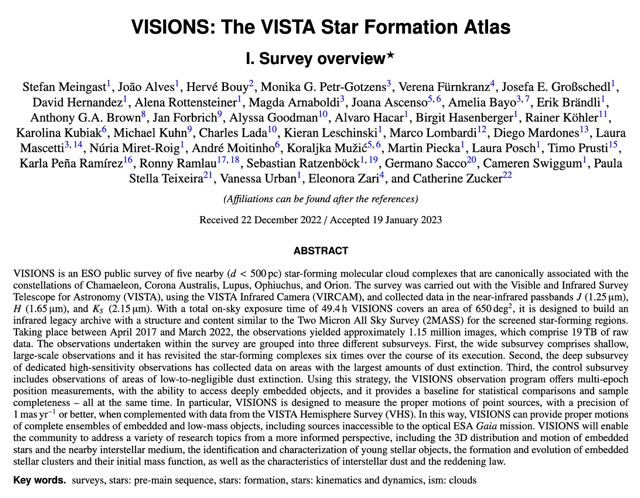
Survey paper published
The first paper in the VISIONS series, including the survey description, has been accepted for publication in Astronomy & Astrophysics.
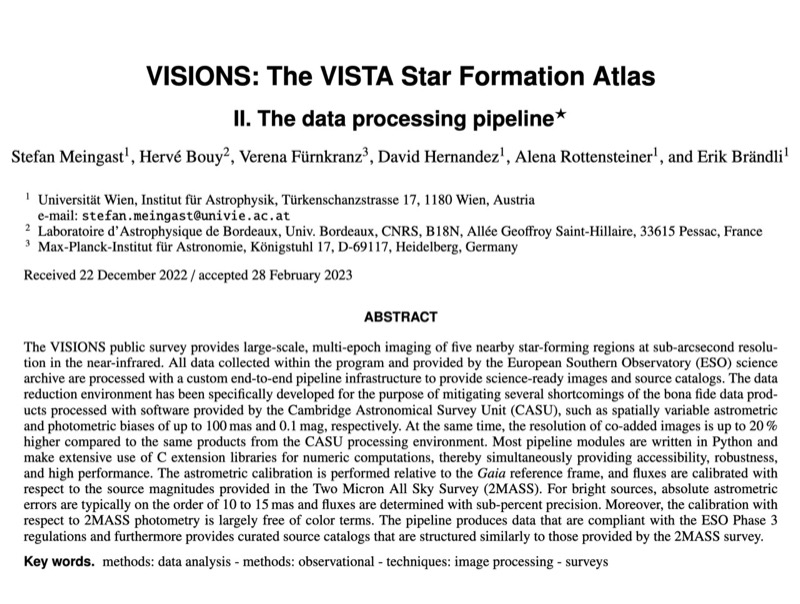
Pipeline paper published
The second paper in the series describes the data processing pipeline behind all VISIONS data products.
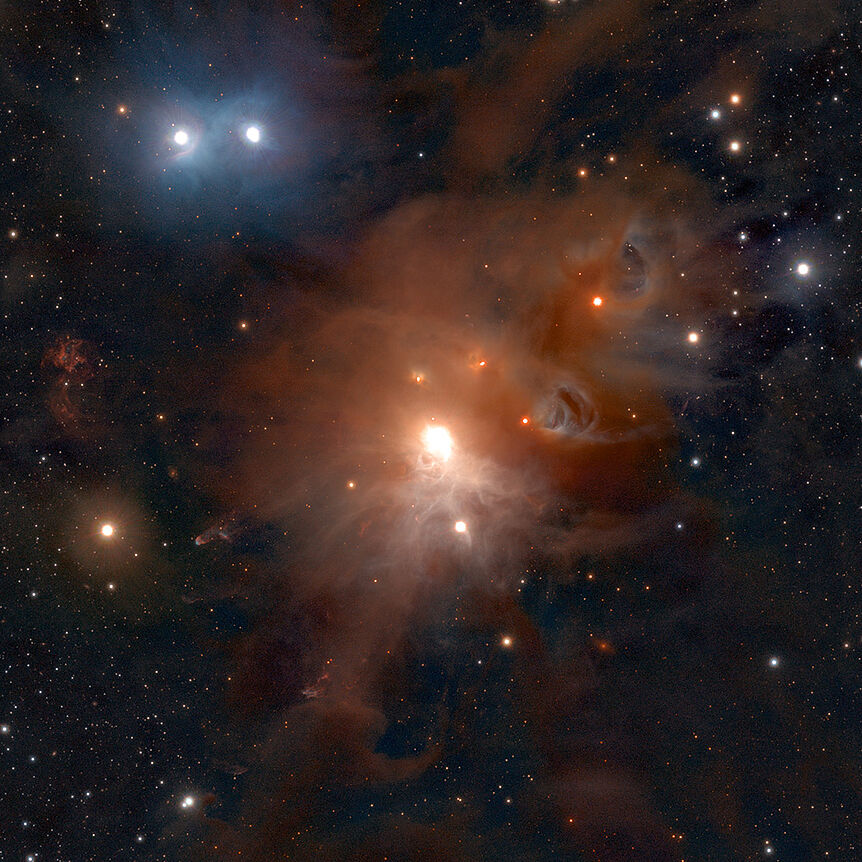
Data Release 2
All VISIONS observations of the Corona Australis star-forming region, 840 GB in volume, are now available through the ESO archive.
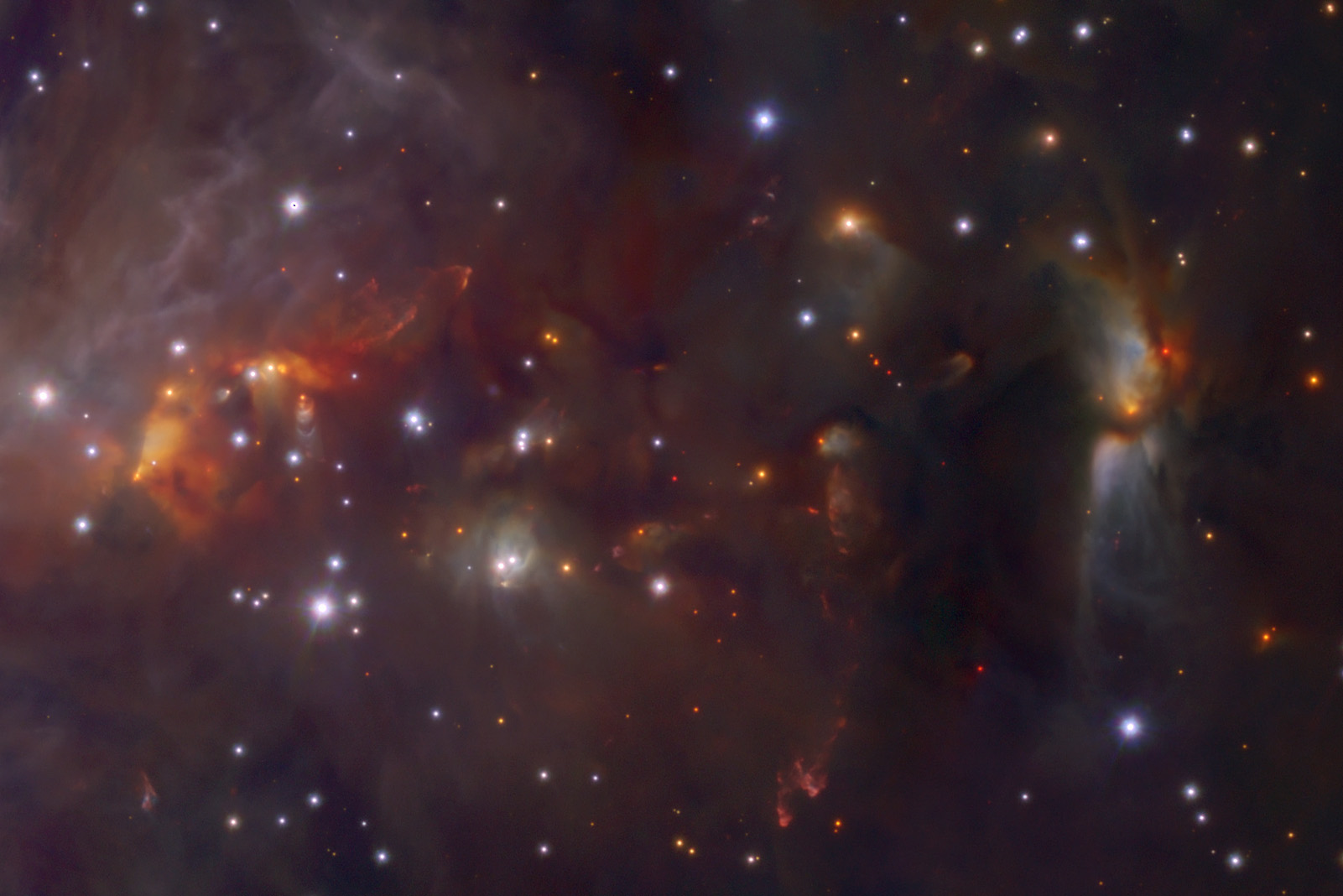
Public data from VISIONS
As an ESO public survey, VISIONS releases its images and catalogs to the worldwide community through the ESO archive. Two data releases are public, and further releases will follow.
Browse the data releases